September 23, 2024
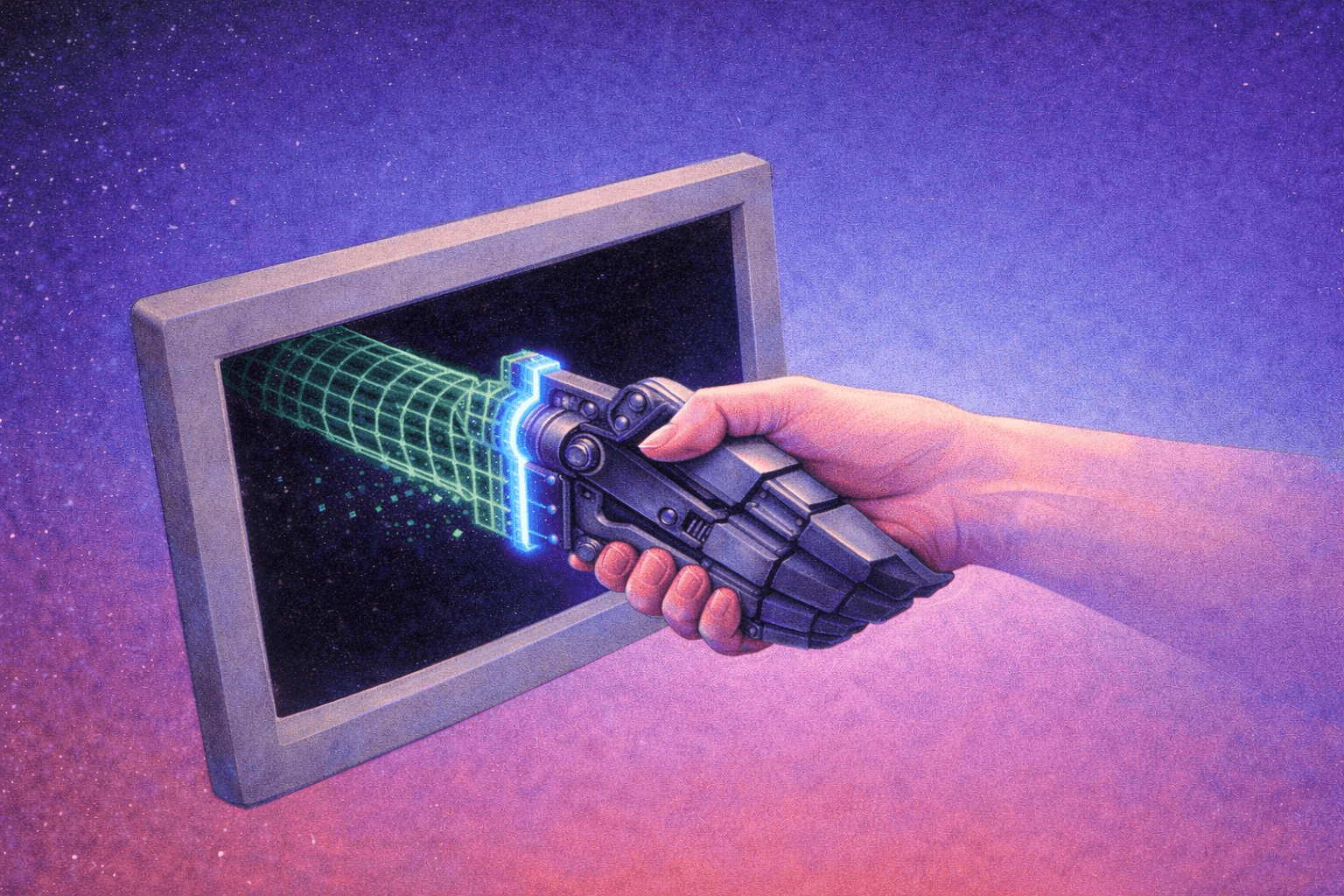
AI isn’t a feature you sprinkle on top of a product. It’s not a magic recommendation engine. And it’s definitely not just a technical concern to “hand off to engineers.” AI changes how products decide, predict, adapt, and treat users differently over time. That makes it a design problem at its core.
First Principles: What AI Actually Does in Products
At a high level, machine learning systems tend to do one (or more) of the following:
Predict something (future behavior, outcomes, risk, usage)
Group things (users, behaviors, content, patterns)
Recommend actions (what to do next, what to change)
Automate decisions (sometimes with feedback loops)
For designers, the important question is not which model is used, but what kind of decision is the system making and how visible is that decision to the user?
Every AI-powered product implicitly answers:
Who gets treated similarly?
Who gets flagged as “different”?
What the system thinks matters most
How confident it is in those judgments
Key Machine Learning Concepts (Supervised vs. Unsupervised Learning)
Supervised learning works with labeled data. The system learns from examples where the “correct answer” is known.
Common product implications:
Predicting churn
Estimating costs or usage
Classifying outcomes (yes/no, high/low risk)
UX impact:
These systems feel authoritative
Users often assume they are “right”
Designers must handle uncertainty and confidence carefully
Unsupervised learning, on the other hand, finds patterns without predefined labels.
This is often used for:
User segmentation
Behavioral clustering
Discovering emergent patterns
UX impact:
Users may not understand why they’re grouped
Labels like “people like you” need careful framing
Explainability becomes a design responsibility
Prediction vs. Explanation
Many models are excellent at prediction but terrible at explanation.
This matters because:
Users don’t trust outcomes they don’t understand
Designers are often responsible for interpreting model outputs
“Why am I seeing this?” becomes a core UX question
This is where feature importance and model transparency matter—not as technical artifacts, but as design inputs. A system that can say: “Your AC usage matters more than your lighting” is fundamentally more usable than one that simply says: “Your bill will increase.”
Clustering, Segmentation, and the Myth of the Average User
Clustering algorithms group users based on similarity—usage patterns, behaviors, preferences.
This sounds harmless, but it has major design implications:
Segments become identities
Recommendations reinforce behavior
Outliers risk being underserved or misclassified
For UX designers, this raises questions like:
Should users know what group they’re in?
Can users move between clusters?
What happens when the system is wrong?
Good AI UX designs allow escape hatches:
Manual overrides
Editable preferences
Transparent comparisons
Hybrid Systems: When Multiple Models Work Together
Most real products don’t rely on a single model.
Instead, they combine:
Prediction models (what will happen)
Clustering models (who is similar)
Rules engines (what’s allowed)
Knowledge bases (what experts say)
From a design perspective, this means:
The system’s “voice” must be consistent
Conflicting recommendations need resolution
Users need clarity on what’s automated vs. advisory
This is where AI stops being “smart” and starts being opinionated—and opinionated systems must be designed intentionally.
Automation vs. Assistance: A Critical UX Boundary
One of the most important distinctions I learned is the difference between:
Decision support (suggesting actions)
Decision automation (taking actions)
Automation introduces:
Loss of user agency
Risk amplification
Trust erosion if outcomes are surprising
Strong AI product design often starts with:
Suggestions before automation
Clear previews of impact
Reversible actions
Trust is built when users feel in control, not impressed.
Privacy, Fairness, and Design Accountability
AI systems inevitably treat users differently.
That makes questions of privacy and fairness design responsibilities, not just legal ones.
Key principles I now design around:
Data minimization: collect only what’s necessary
Purpose clarity: explain why data is used
Inclusive defaults: avoid designing only for “ideal” users
Human-in-the-loop: allow expert oversight where stakes are high
Fairness is not just about outcomes, it’s about access, interpretation, and representation.
Generative AI: Creativity Still Needs Direction
Generative models (like large language models) introduce a different challenge:
Outputs are flexible, creative, and unpredictable
UX constraints become even more important
Prompt design is a form of interaction design
For designers, this means:
Designing inputs as carefully as outputs
Handling ambiguity gracefully
Setting boundaries around tone, length, and intent
AI can generate content, but designers generate meaningful experiences.
What This Changed About My Design Practice
After working through these concepts, I no longer ask:
“How can AI improve this product?”
Instead, I ask:
What decisions does this product make?
Who benefits from those decisions?
Who might be harmed or excluded?
How visible should intelligence be?
Where should humans stay in control?
AI doesn’t remove the need for design judgment, it amplifies it.
Closing Thought
The future of AI products won’t be defined by better models alone. It will be defined by designers who understand:
Systems, not just screens
Consequences, not just features
People, not just predictions
That’s the work I’m interested in doing.
Please note: Copy enhanced with ChaGPT.